
Workforce Cost Intelligence
donia® helps operations and HR teams extract payroll data, allocate labor costs to production activities, and monitor workforce KPIs in real time. Turn raw documents and timesheets into structured insights without manual effort.
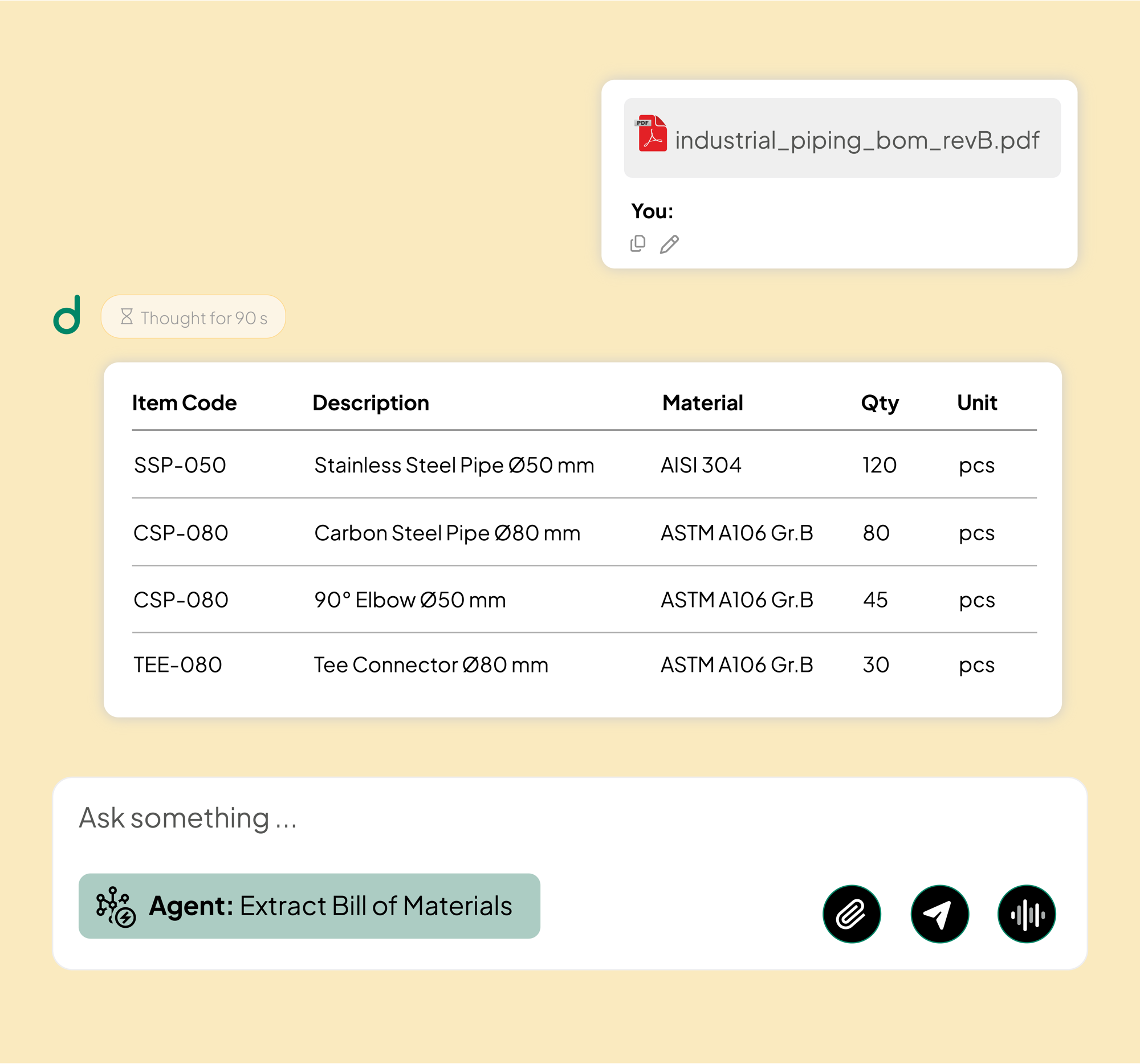
01. Payroll PDFs → Data Extraction → Labor Cost Analysis
Labor Cost Analysis
Extract and structure labor cost data from payroll PDFs, time records, and HR system exports. donia® reads raw documents, identifies cost components by employee category and period, and transforms them into clean, queryable data — eliminating manual spreadsheet work and reducing processing errors.
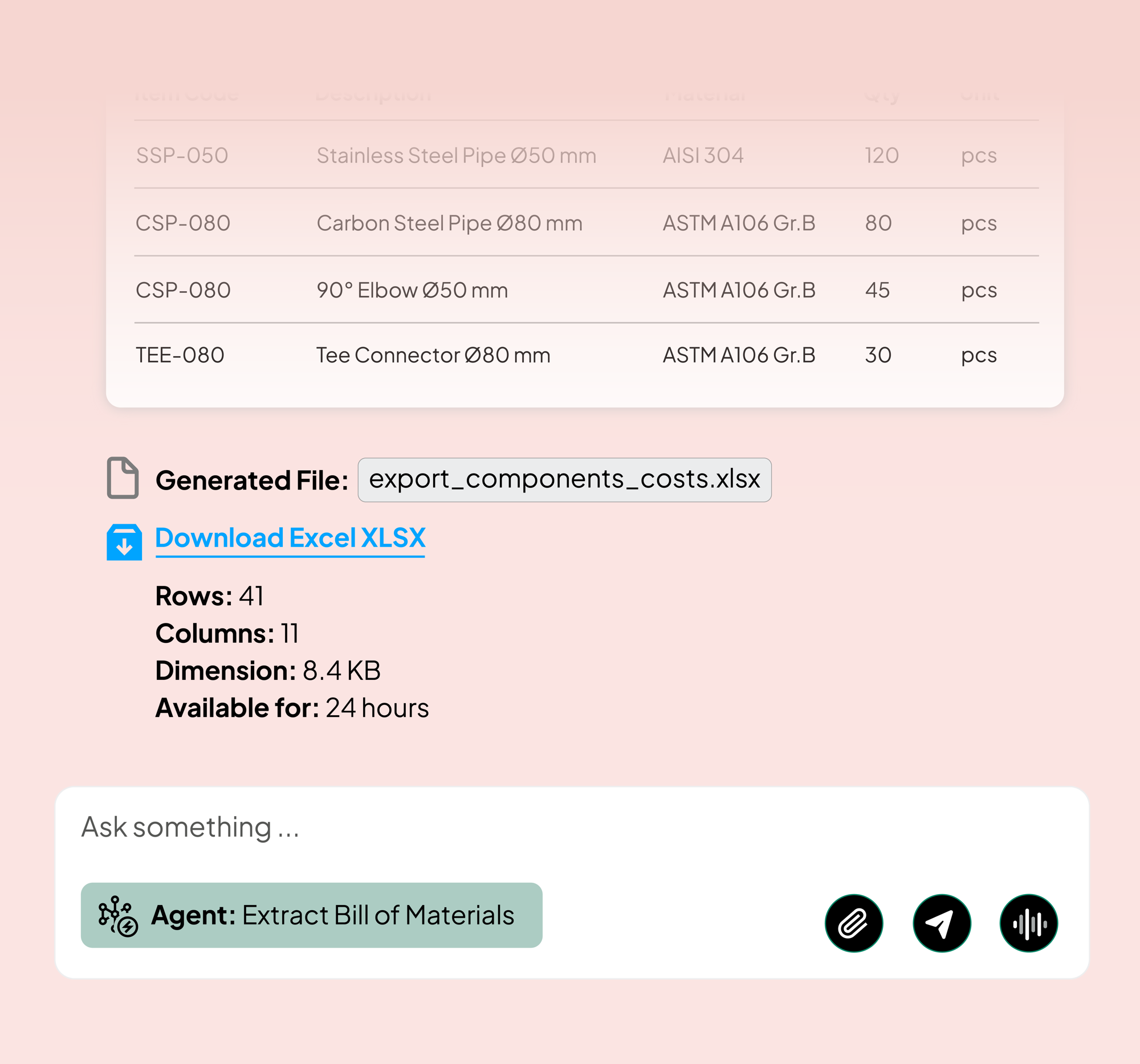
02. Timesheets → Activity Mapping → Cost Allocation
Cost Allocation
Map hours worked to production orders, cost centers, and operational activities. donia® processes timesheet data, links each entry to the correct job or department, and allocates labor costs automatically — giving managers accurate cost visibility at order and line level.
03. Workforce Data → Direct vs Indirect → KPI Dashboard
KPI Dashboard
Aggregate workforce data into dashboards that separate direct and indirect labor, track productivity ratios, and surface cost anomalies. donia® structures raw data into KPIs that help operations managers make faster and more confident decisions across the factory floor.
Your factory operations, powered by donia®
Extractor
Parse payroll documents, HR exports, and attendance sheets to extract structured labor cost data ready for downstream processing.
DB Node
Query HR databases and ERP tables to retrieve employee records, payroll details, and cost center assignments within any workflow.
Code Executor
Apply custom logic for overtime calculations, cost allocation rules, and productivity ratios within labor analysis workflows.
Chat Event
Answer workforce cost queries through conversational interfaces connected directly to live operational and payroll data.
IF
Route labor records based on conditions such as employee type, department, or cost center to apply the correct allocation rules automatically.
To Markdown
Format cost summaries, KPI snapshots, and labor reports as clean readable text ready for operations managers and finance teams.
Frequently asked questions:
-
Do I need coding skills to build labor cost workflows?
No. donia® lets you design labor cost and workforce workflows visually using nodes, conditions, triggers, and AI logic. Technical teams can extend flows with code when needed, but most payroll and cost allocation automations can be configured without writing a single line of code.
-
Can donia® connect to our HR system, ERP, or payroll database?
Yes. donia® is built to integrate with HR systems, ERP platforms, payroll databases, and operational data sources. You can connect employee records, timesheets, cost centers, and payroll exports to build workflows that reflect how your operations actually run.
-
Can I use donia® for multiple workforce scenarios?
Definitely. You can use it for payroll extraction, activity-based cost allocation, KPI reporting, direct vs indirect labor analysis, overtime tracking, and many other workforce workflows — all within the same platform and without being locked into a single use case.
-
Does it support AI models like GPT or local LLMs?
Yes. donia® can orchestrate external models such as GPT, Claude, or Grok, and it can also work with local open-source models managed with Ollama. This gives you flexibility across cloud, private, and hybrid environments.
-
Is donia® suitable for secure industrial environments?
Yes. donia® is designed for operational contexts where control, traceability, and data protection matter. It can be deployed in ways that align with internal IT requirements, including integrations with private HR systems and factory data sources.
Some clients feedbacks

“donia® automated the extraction of components and routing cycles from DOCX production orders. Manual checks replaced by a structured workflow — faster and more consistent across our operations.”

Luca Passuello
Operations, Gruppo Gonzato
“With donia®, we extract bills of materials from electrical diagrams automatically. Less manual effort, better accuracy, and engineering documents turned into production data faster.”

Nicola Vaccari
CEO, Siger
“We use donia® on two agentic workflows: order entry from email and Text-to-SQL for job scheduling. Faster recognition of customers and operational data — smarter order management and planning.”

Marco DeGiorgi
Operations Team, Gruppo AroAutomate labor cost analysis with AI workflows.
14-day trial, no credit card required.