

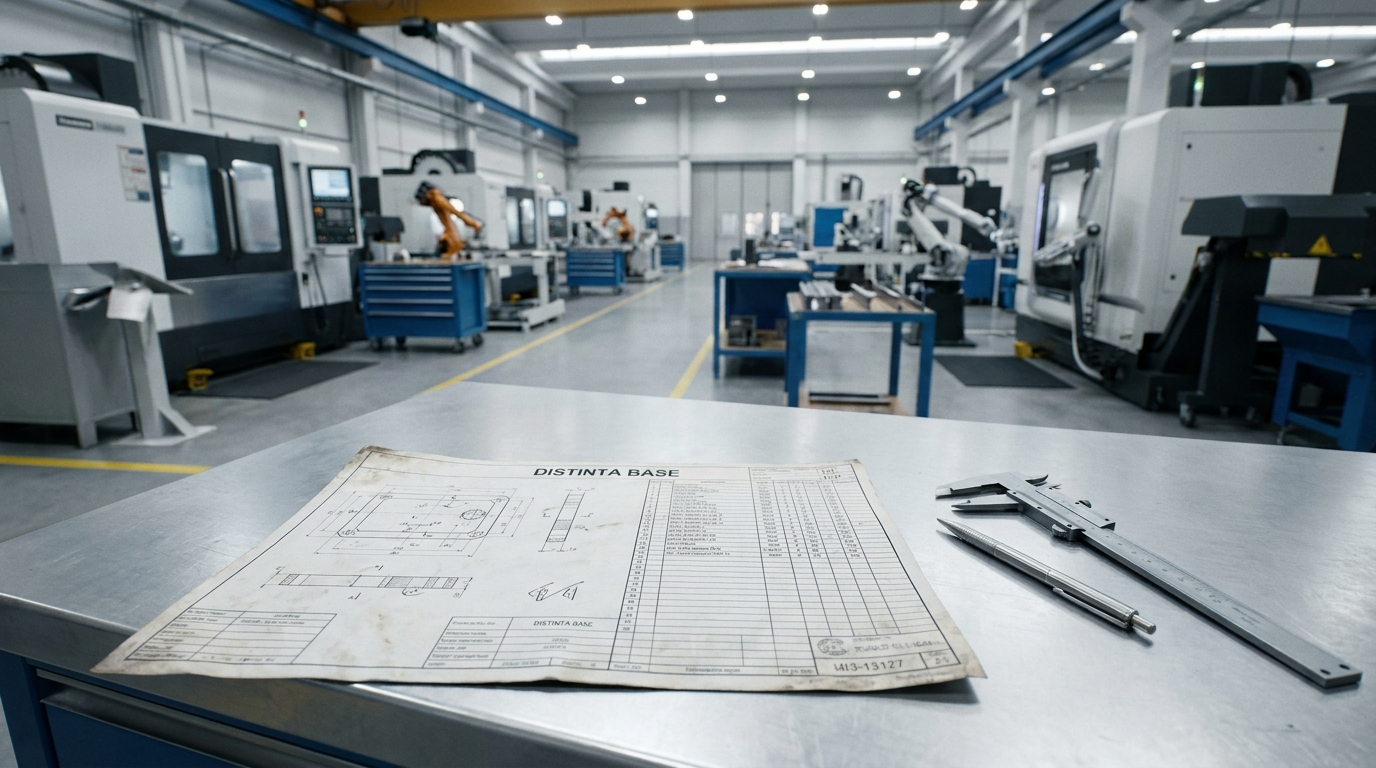
Gruppo Gonzato is a mid-size manufacturer of precision metal components, supplying customers across the automotive and industrial sectors. When Luca Passuello, Head of Operations, began evaluating donia®, the company was managing production orders through a combination of ERP exports, spreadsheets, and manual shopfloor communication. Order lead times were unpredictable. Exceptions were handled by phone. And the gap between what was planned and what was actually happening on the floor was visible only hours later.
Ninety days after going live on three production lines, lead times had dropped by 47% and unplanned downtime events requiring manual intervention had fallen to near zero.
The problem: execution gaps and reactive coordination
Before donia®, Gonzato's operations team faced a recurring pattern. Production orders arrived in the ERP and were manually translated into shopfloor instructions. Supervisors would check stock, confirm routing, and coordinate with logistics by phone or on paper. When a component was missing or a machine was delayed, the discovery happened late — often after the window to adjust had closed.
Passuello's team knew the data existed inside the ERP and the document archive, but there was no practical way to connect that data with real-time production status and act on it automatically. "We had the information, but it was always in the wrong place at the wrong time," Passuello said.
What changed with donia®
donia® was deployed to automate two critical flows. The first was production order processing: donia® extracted component lists and routing cycles directly from DOCX production order documents, removing the need for manual re-entry and eliminating a source of transcription errors that had caused recurring scheduling problems.
The second flow was exception routing. When a deviation occurred — a missing semi-finished part, a machine slowdown, or a capacity conflict — donia® triggered a structured workflow that notified the right person, surfaced the relevant data, and recorded the resolution. Manual checks were replaced by a consistent, auditable process.
Both workflows were built visually inside the donia® Workflow Builder, without custom development. The team was able to iterate and adjust logic as they understood more about their own edge cases.
Results after 90 days
- 47% reduction in order lead time across three production lines
- Near-zero unplanned downtime events requiring manual escalation
- Elimination of manual document re-entry for production order processing
- Faster exception resolution with full traceability at each step
The operations team now runs the same volume of orders with less coordination overhead. Supervisors spend less time chasing information and more time managing exceptions that genuinely require judgment.
What Passuello says
"donia® automated the extraction of components and routing cycles from DOCX production orders. Manual checks replaced by a structured workflow — faster and more consistent across our operations."